Modular Display Rentals
Modular Display Rentals in Los Angeles is useful when repeatable components, flexible booth sizes, faster install, and enough customization to avoid a stock look matter more than owning every component. Rental planning clarifies where inventory helps, what still needs coordination, and how the choice affects venue fit, installation, graphics, and show-week support.
Modular Display Rentals Planning Read
Modular Display Rentals in Los Angeles is useful when repeatable components, flexible booth sizes, faster install, and enough customization to avoid a stock look matter more than owning every component. Rental planning clarifies where inventory helps, what still needs coordination, and how the choice affects venue fit, installation, graphics, and show-week support.
The rentals in Los Angeles is useful when repeatable components, flexible booth sizes, faster install, and enough customization to avoid a stock look matter more than owning every component. Planning clarifies where rental inventory helps, what still needs coordination, and how the rental choice affects venue fit, installation, graphics, and show-week support.
What the Rental Scope Still Requires
Rental work should never be framed as if the inventory arrives fully solved. Related scopes such as Exhibitor Appointed Contractor Services, General Contractor Trade Show Services, Trade Show Project Management, and Trade Show Booth Design often still need to wrap around the rental package to make the environment work. Graphics, freight timing, venue alignment, labor coordination, AV integration, and show-site supervision can all remain part of the plan even when the physical system is rental-based. The rental option therefore needs to be evaluated as one part of the larger production path. That makes it more useful for buyers who want to understand the real work involved instead of being sold a false idea that renting removes every operational dependency from the assignment.
Venue Fit and Delivery Speed
Rentals can be especially effective when they are evaluated against real venue conditions. A package that works well in one room or hall may need a different configuration or support plan at venues such as JW Marriott Los Angeles L.A. LIVE. Delivery speed matters, but usable speed matters more. The rentals should help buyers think through access, venue-managed services, technical overlays, and the amount of staging support still needed on-site. In Los Angeles, that venue-aware approach is what turns rental inventory into a strategic advantage rather than a rushed compromise. The point is not to promise that rentals eliminate complexity. The point is to show how they can reduce unnecessary fabrication while still respecting the venue and the event objective.
How Rentals Change the Final Environment
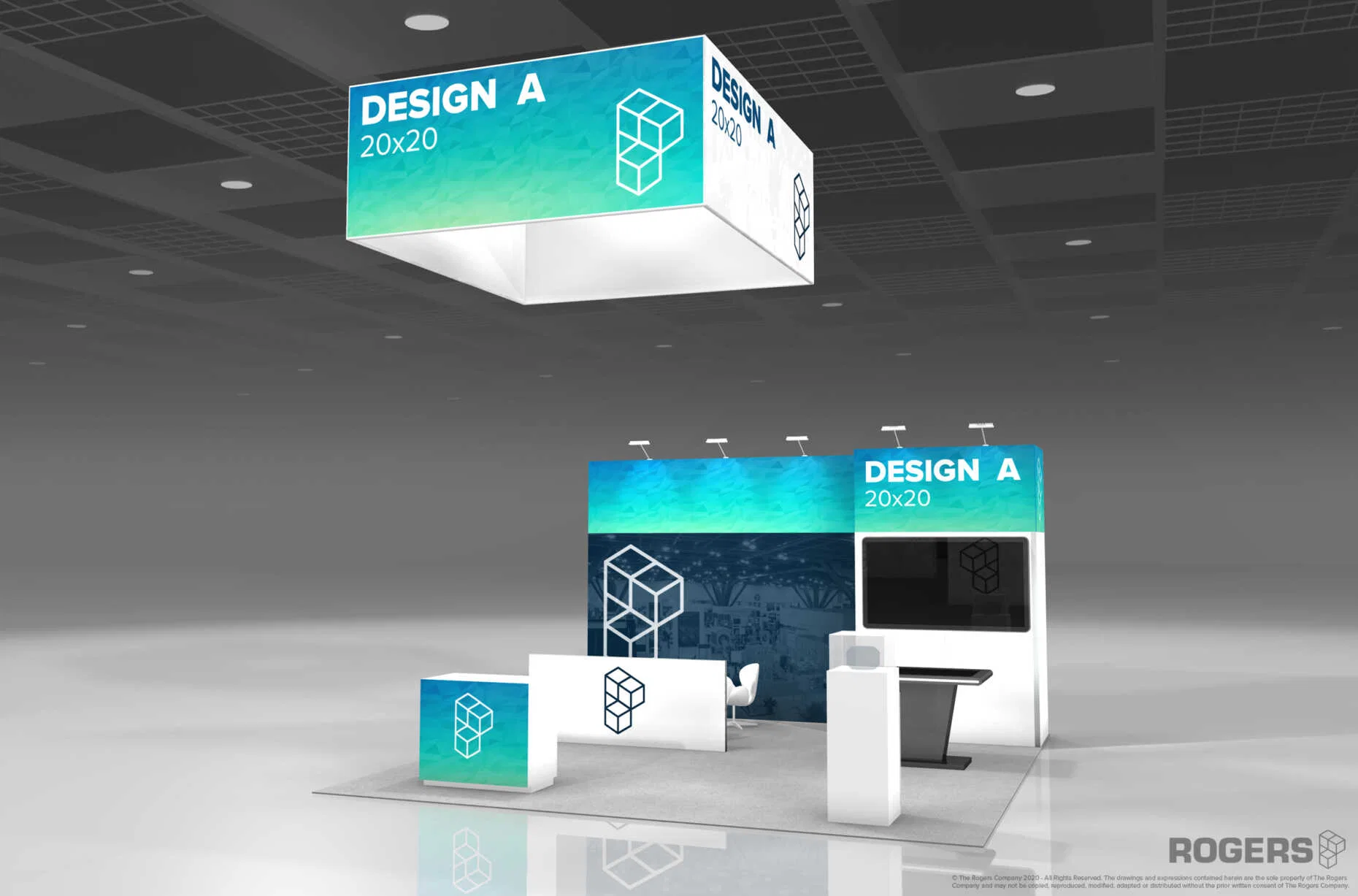
Rental choices also shape the final experience. Booth formats such as Island Exhibit Booths, Modular Trade Show Booths, and Portable Trade Show Displays and exhibit categories such as Sponsor Activation Environments, Experiential Pop Up Environments, and Museum Style Brand Installations can all be supported through rental-driven programs, but the planning logic changes depending on the environment. Some assignments benefit from modular repeatability with stronger graphic treatment. Others need more furniture, LED, scenic detailing, or registration infrastructure to feel complete. Comparing those outcomes in practical terms helps buyers understand how the rental path affects flexibility, visual impact, reuse planning, and the amount of customization still required before the audience arrives.
Budget Control Without False Economy
The rental conversation usually begins with budget, but the discussion has to move beyond simple savings language. The useful question is whether the rental option protects the objective while avoiding unnecessary fabrication, storage, or refurbishment costs. In some cases that answer is clearly yes. In others, a rental-heavy approach can create new complexity if the program still demands extensive scenic modification, technical coordination, or field labor. Buyers need a section that explains that tradeoff directly. The goal is not to oversell rentals. It is to help the buyer use them intelligently and to package them with the right support so the final environment still feels complete instead of underbuilt.
Planning Your Next Rental Program
If your team is comparing the rentals now, the next step is to review venue, event type, show date, branding requirements, and the services that still need to wrap around the rental package. That discussion usually reveals whether the program needs a cleaner modular solution, a custom-and-rental hybrid, or stronger coordination around graphics, AV, logistics, and supervision. It also shows which linked paths on the rentals should matter next so the rental choice is evaluated in context. Rental planning helps buyers move faster without losing control of what the show still has to accomplish on-site.
What Buyers Should Confirm Before Approving Rentals
Before approving the rentals, buyers should confirm what the rental package actually includes, what still needs to be sourced separately, and how the venue or show manual will affect the final setup. That confirmation step is where many rental decisions become either cleaner or riskier. A package that looks efficient on paper may still need more graphics, more AV, more labor planning, or tighter show-site supervision than expected once the real venue conditions are known. A disciplined buyer should push that review forward early. It encourages buyers to compare the rental option against the actual operating environment instead of treating the catalog description as the full scope. In Los Angeles, that discipline is especially valuable because the same rental strategy can perform very differently once it is translated into a convention hall, a conference venue, a sponsor lounge, or a private event setting with its own rules and timing pressures.
That extra review step helps the buyer avoid approving a rental path that looks efficient in proposal form but still leaves too many critical details unresolved before move-in begins.
Internal Buy-In for Modular Display Rentals
The hard part of buying the rentals is not picking the vendor — it is explaining internally why the scope costs what it costs. The rentals: Portable Display Rentals, AV Rental for Trade Shows, and Exhibitor Appointed Contractor Services.
Where Modular Display Rentals Connects Next
The rentals is rarely the last decision. Adjacent decisions often include Portable Display Rentals, AV Rental for Trade Shows, and Exhibitor Appointed Contractor Services.
Los Angeles Event Landscape
Los Angeles is a working trade show market.
Each pattern has its own lead-time rhythm.
Los Angeles Venues We Support
Los Angeles events cluster around a small number of venues, and each one has a different personality on the floor.
The plan has to match the specific building.
Operational Rules On Los Angeles Floors
Los Angeles floor operations follow the venue's own manual.
The workable version of Los Angeles labor planning is boring on purpose: read the manual, match the scope to its categories, order what the venue sells directly, and schedule everything else around its posted windows. Surprises almost always trace back to a step someone skipped.
What's included in the project scope
For programs that repeat, asset management becomes part of the engagement — storage, graphic rotation, refurbishment, and re-crating are planned rather than one-off.
Scope boundary is as important as scope inclusion.
What an engagement actually looks like
After the brief, the work turns to the building itself.
Install days are owned by a single on-site lead.
Throughout show hours, the on-site lead stays present.
Strike and closeout happen the same day.
Pricing and scheduling
Every project has the same cost drivers.
Lead time drives everything. Custom: 16 to 20 weeks. Rental: 8 to 12.
How project performance gets measured
Most programs in Los Angeles are evaluated on lead-capture volume, meetings booked on the floor, and qualified-pipeline attribution after the show. The booth is a means to those numbers — it is not the number itself.
A week after the show, the booth's actual floor performance is already clearer than any pre-show projection. We document those observations alongside the technical closeout so the next cycle inherits real signal, not nostalgia.
What makes our work different
Trade Show Services keeps the work local.
Consistency across show dates is the other reason to hire local. The same crew that built the booth runs the install, knows the pack-out, and catches the small things — a missing hardware pack, a graphic edge that needs reseating, a storage crate routed to the wrong bay — without needing the client team to intervene.
Modular Display Rentals planning questions
Q: Do you work at Santa Monica Pier?
Q: How much lead time is ideal?
Q: What information kicks off a project?
Q: Who runs the booth on-site?
Q: Can the booth travel to the next city on our calendar?
Same structure, swappable graphics, standard crates.
Q: What happens if something breaks during show hours?
The on-site lead handles it.