Santa Monica, CA
Santa Monica gives the Westside its two real event anchors, Barker Hangar and the Pier, and both come with access rules unlike anything downtown, which is why we plan Santa Monica jobs on their own logic.
Market Coverage
Barker Hangar load-in and airport-grounds coordination
Santa Monica Pier permitting and public-space activations
Coastal-corridor freight timing around tourist traffic
Airport noise curfews and delivery-hour restrictions
Beach-city labor staffing for hangar and outdoor builds
Santa Monica, CA Planning Read
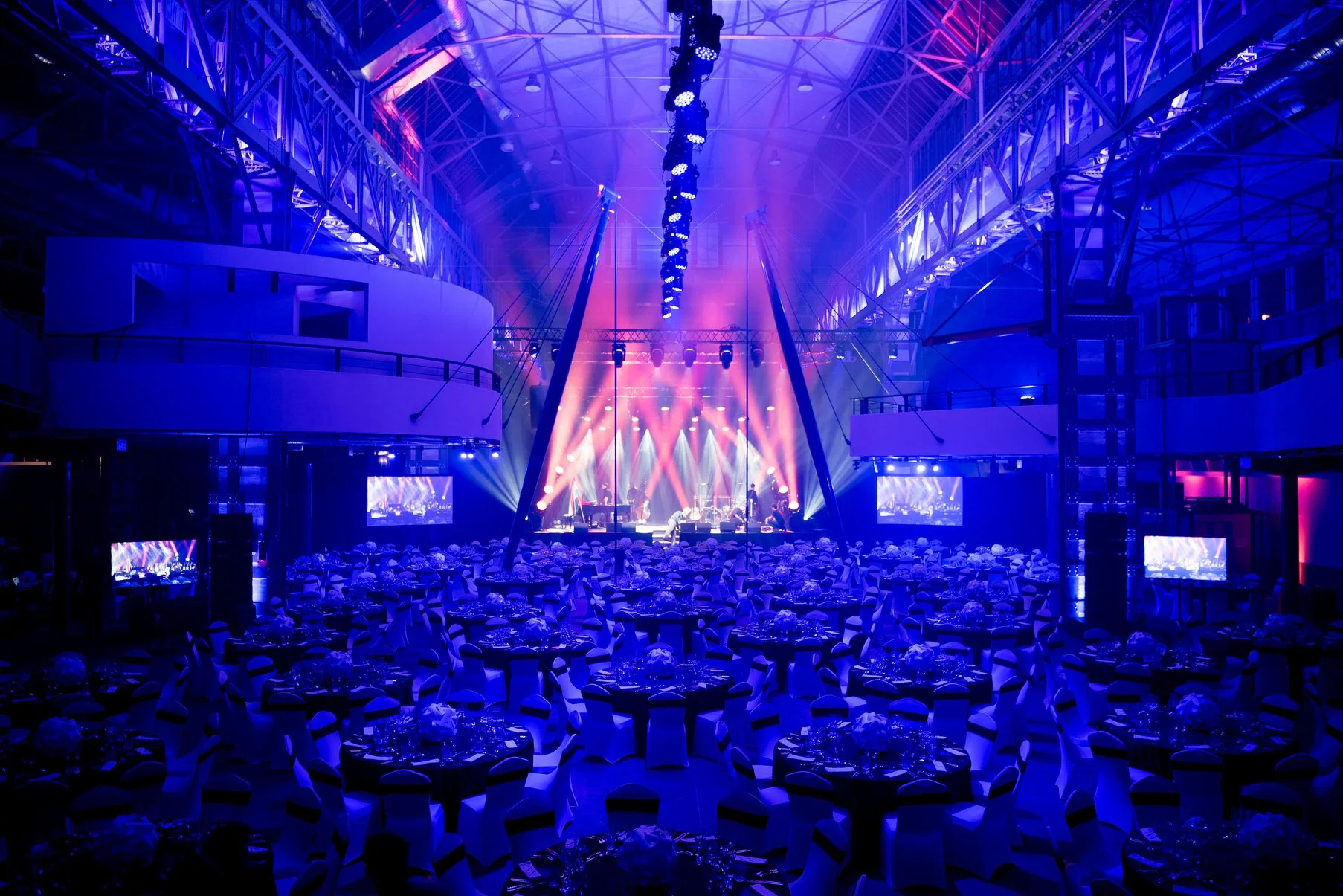
Barker Hangar sits inside the Santa Monica Airport perimeter, a converted aviation hangar with an open, column-free floor that suits exhibits, product launches, and galas better than most conventional ballrooms. Its aviation-hangar character, exposed steel trusses and a wide clear span, gives brand and automotive clients a look downtown hotel ballrooms cannot offer.
Barker Hangar sits inside the Santa Monica Airport perimeter, a converted aviation hangar with an open, column-free floor that suits exhibits, product launches, and galas better than most conventional ballrooms. Its aviation-hangar character, exposed steel trusses and a wide clear span, gives brand and automotive clients a look downtown hotel ballrooms cannot offer.
Airport-Grounds Access and Curfews
Santa Monica Airport sits inside a residential city, and the surrounding neighborhoods have long pushed for strict noise and operating-hour limits on activity there. That history carries over into event logistics: Barker Hangar load-ins and load-outs run on tighter curfews than most exhibit venues, and generator or amplified-sound use after certain hours draws immediate attention from the venue and the city.
We schedule Barker Hangar work with these curfews built in from the start rather than treated as a late constraint, since a crew caught running past the cutoff can jeopardize the venue's relationship with the surrounding community and, by extension, future bookings there.
Santa Monica Pier Activations
The Pier is one of the most recognizable landmarks in Los Angeles, and brands regularly want a presence there for exactly that reason: the boardwalk, the Ferris wheel, and the beach backdrop deliver instant recognition that no interior venue can match. But it is a working public space, not an exhibit hall, run by the city and the Pier's own operating authority.
Permitting a Pier activation takes real lead time, coordination with the Pier's event office, and a plan for managing pedestrian flow around an already busy tourist attraction. These builds tend to be pop-up in scale, staged for a day or a weekend rather than a multi-day trade show run.
Working the Coastal Traffic Corridor
Santa Monica's street grid was not built for exhibit freight. Ocean Avenue, Main Street, and the streets feeding the Pier and Third Street Promenade see heavy weekend and summer tourist congestion, and parking near either anchor venue is limited and tightly enforced.
We schedule deliveries into early morning or late evening windows whenever possible, and we route trucks along Lincoln or Centinela rather than through the Promenade corridor to avoid the worst of the pedestrian and beach traffic that builds through the day.
Distance to Downtown and Regional Venues
Santa Monica sits roughly fifteen miles west of the Los Angeles Convention Center, a drive that can run anywhere from thirty minutes to well over an hour depending on the time of day, since it crosses the entire width of the 10 freeway corridor. Clients running a program with legs in both places need real buffer time built into transfer schedules.
Closer neighbors are more forgiving: Venice and Marina del Rey both sit within a few miles south, and Culver City is a short, direct run inland via Centinela, making Santa Monica a workable regional base for Westside-only programs even when downtown is out of reach.
Hotel and Lodging Base for Barker Hangar Events
Santa Monica's hotel inventory along Ocean Avenue and Main Street puts attendees and crew within a short walk or rideshare of Barker Hangar, which is a real advantage over venues where the nearest lodging is a freeway exit away. That proximity shortens call times and reduces the transportation logistics a producer has to manage.
Rates here run higher than inland Los Angeles, particularly in summer, so budgeting for a Santa Monica program should account for lodging costs that can run well above a downtown or airport-area comparison.
Freight and Drayage into Barker Hangar
Barker Hangar has a functional load-in for exhibit-scale freight, including full trailers, but the airport's access roads and gate procedures move slower than a purpose-built convention marshaling yard. We build extra time into drayage schedules specifically for the security and gate-check process at the airport entrance.
Material headed to a Pier activation moves differently again, usually broken into smaller loads that can be hand-carried or moved on light equipment across boardwalk surfaces that were never designed for heavy freight traffic.
Labor Staffing for Santa Monica Programs
Crews for Barker Hangar jobs work under the venue's own safety and access rules, which include airport-specific orientation requirements for anyone working near active taxiways or aircraft movement areas, even when the event itself is entirely inside the hangar.
Pier work calls for a different labor profile entirely, crews comfortable working around dense pedestrian crowds, marine air conditions, and a public setting where security and crowd management matter as much as the build itself.
Planning a Santa Monica Program Around Its Two Anchors
Most Santa Monica jobs fall clearly into one of two categories: a controlled Barker Hangar build with airport-grounds rules, or a public Pier activation with city permitting and pedestrian management. Very little falls in between, since the city has no third-tier venue to bridge the gap.
We start every Santa Monica scope by confirming which of the two anchors the program actually needs, since the access rules, timelines, and crew requirements diverge sharply between them from the first planning call.
Common questions
Is Barker Hangar the main event venue in Santa Monica?
Yes. Barker Hangar, a converted aviation hangar on Santa Monica Airport grounds, is the city's primary bookable exhibit and event space. It suits product launches, galas, and mid-size trade events, and it operates under airport-specific access, security, and noise rules rather than a standard convention center's, so vendor clearance needs to be filed well ahead of install day.
Can you run a trade show activation on the Santa Monica Pier?
Yes, but it is a public-space permit process rather than a venue booking. The Pier works well for pop-up brand activations and photo-driven marketing moments, coordinated with the Pier's event office and scheduled around pedestrian traffic rather than exhibit-hall logistics.
Are there noise or hour restrictions at Barker Hangar?
Yes. Santa Monica Airport sits inside a residential area, and the venue enforces tighter load-in, load-out, and amplified-sound curfews than most exhibit venues. We build these limits into the schedule from the start rather than treating them as a late-stage constraint.
How far is Santa Monica from the Los Angeles Convention Center?
About fifteen miles, but the drive can run from thirty minutes to over an hour depending on traffic across the 10 freeway corridor. Programs spanning both venues need real buffer time built into any same-day transfer schedule.
What is the best way to get freight into Barker Hangar?
Full trailers can reach Barker Hangar's load-in, but the airport's gate and security procedures move slower than a purpose-built marshaling yard. We schedule extra time for the gate-check process and coordinate drayage windows directly with the venue ahead of install day.
Is Santa Monica a good lodging base for a Barker Hangar event?
Yes. Hotels along Ocean Avenue and Main Street put crew and attendees within a short walk or rideshare of the venue, cutting transportation logistics compared to venues where lodging is a freeway exit away. Rates run higher than inland Los Angeles, especially in summer.